


The scale of opportunity is substantial: Australia’s private real estate credit market sits at $50 billion today and is forecast to reach $90 billion by 2029. Independent research also supports this outlook, with Broadridge projecting Australia’s private credit AUM to rise from around 100 billion today to 154 billion by 2026, reflecting structural shifts in lending dynamics but what really stands out is where this growth is concentrated.
Private credit penetration growth in residential development has jumped from 14.7% in 2019 to 26% today, with projections of 35% by 2030. This isn’t just growth – it’s a fundamental shift in how residential development gets funded, with non-bank lenders capturing an increasingly dominant share.
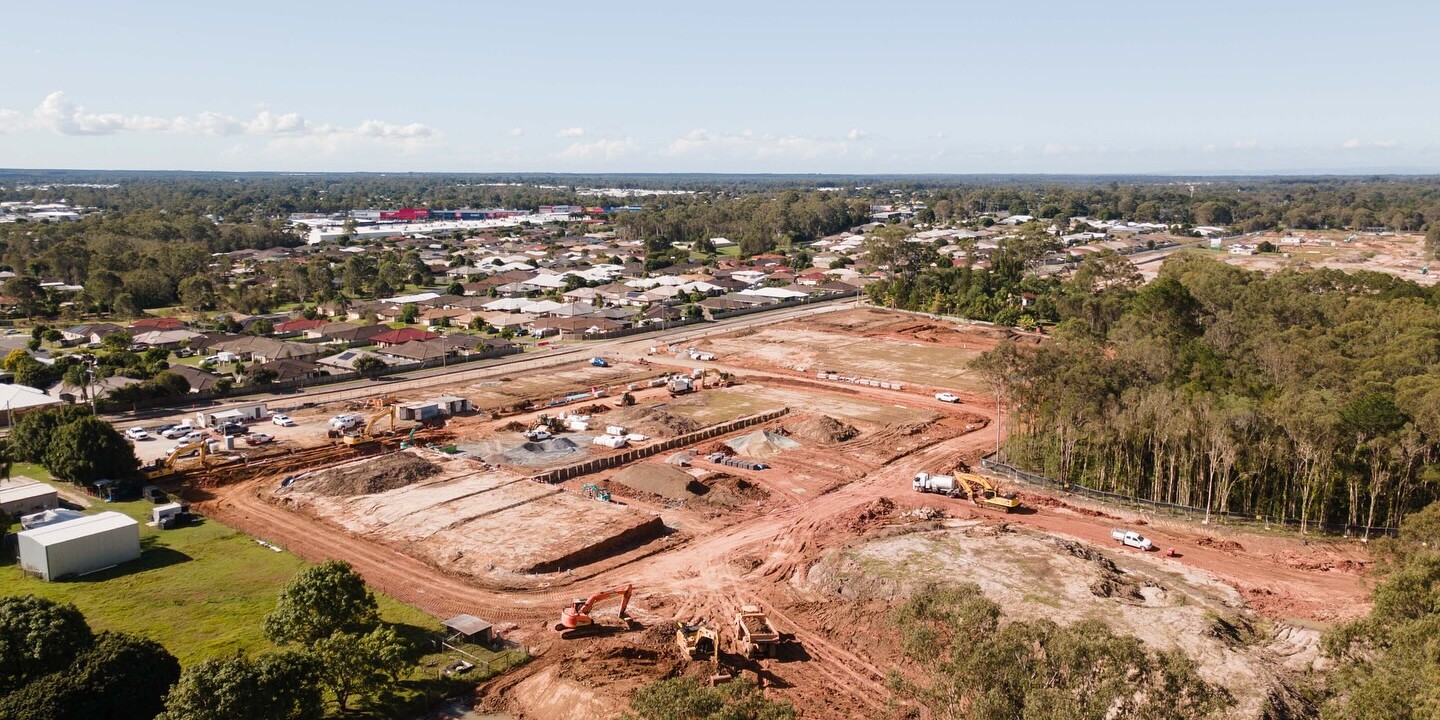
Where Our Strategy Sits: The Land Foundation
CBRE’s lender sentiment survey reveals non-bank lenders have an overwhelming preference for residential build-to-sell projects. The data shows private real estate credit managers are willing to accommodate:
- Higher LVRs (60%+ vs banks at 40-50%)
- Lower interest coverage ratios (1.35x)
- More flexible terms overall
While this data covers the broader “residential build-to-sell” category, there’s a crucial distinction in where we focus at Ark: we concentrate specifically on residential land development – the essential foundation that enables all downstream residential construction. Every apartment, townhouse, or house that benefits from this favourable financing environment starts with appropriately zoned, serviced land. We’re positioned at the very beginning of this value chain.
Market Fundamentals Create Upstream Value
The residential supply-demand dynamics create compelling opportunities at every stage of the development pipeline:
Apartment supply forecast at ~60,000 units annually through 2025-29
Vacancy rates projected to compress from 1.9% to 1.1% by 2029
New developments commanding 20-30% premiums when compared to established stock for 2-bedroom units, with even larger premiums for 3-bedroom stock
These metrics highlight a fundamental truth: housing demand is creating value throughout the entire development chain, but the greatest leverage often exists at the beginning. When end-user demand is strong and builders can achieve premium pricing, the value flows back through the entire pipeline – from the final sale, to the construction contract, to the development approval, and ultimately to the underlying land that makes it all possible.
As the essential first input in this value chain, appropriately located and zoned residential land captures this demand multiplication effect. Every apartment commanding a 30% premium started as raw or underdeveloped land that someone had the foresight to secure and develop.
Construction Cost Inputs - a Realistic View
One data point that particularly resonates is the construction cost outlook. CBRE expects +20% construction cost growth over 2025-29, with Brisbane and Perth facing the highest pressure due to major infrastructure pipelines competing for resources.
While cost escalation creates challenges across the development pipeline, land development and civil works offer a more manageable risk profile. The beauty of our focus is in the simplicity: land development involves fewer trades and inputs compared to building construction. Where builders juggle dozens of specialised contractors – from concrete and steel to electrical, plumbing, glazing, and finishing trades – land development primarily involves earthworks, utilities, and road construction.
This translates to fewer moving parts, more predictable pricing, and crucially, greater ability to manage and control cost escalation when it does occur. While we’re not immune to input cost pressures, the relative simplicity of civil works means we can more easily secure fixed-price contracts, manage supplier relationships, and avoid the coordination complexity that amplifies cost blowouts in vertical construction.
Why Residential Land Development Finance Matters
Three key insights from the research highlight why the land development space deserves attention:
- Capital Flow Dynamics: The surge in private credit penetration in Australia for residential development (26% today, 35% by 2030) creates downstream demand for developable land. As more capital flows into residential construction, competition for quality, entitled land parcels intensifies.
- Market Structure: With only the top 10 providers controlling 85% of the private credit market, there’s concentration in capital sources but fragmentation in land opportunities. This creates advantages for operators who understand local planning processes, infrastructure requirements, and site selection criteria.
- Economic Timing: As interest rates are forecast to decline through 2025-26, development financing costs should improve. However, land development benefits from shorter project cycles than vertical construction, allowing for quicker capital recycling and reduced exposure to rate volatility.
Looking Ahead
The CBRE data paints a picture of structural change in Australian real estate financing, with private credit becoming an increasingly important capital source for residential development.
For Ark Capital, these market dynamics reinforce the growth trajectory we have already achieved. Over the past decade, Ark has expanded to managing more than $423M+ with a current average return of 10.80% P.A across our funds, consistently delivering strong, risk-adjusted returns to investors. Our disciplined approach has enabled us to grow while maintaining processes and transparency.
Looking ahead, if we continue to compound capital at similar rates to our historical performance, the opportunity highlighted in CBRE’s research directly aligns with our strategy. As Australia’s private real estate credit market grows from $50 billion today to $90 billion by 2029, Ark is positioned to capture this expansion.
The housing shortage isn’t going away. Construction costs are rising. But appropriately positioned, well-located residential land remains the foundation of any solution to Australia’s housing challenge and Ark Capital is focused on turning that foundation into long-term investor growth.
Embracing the Discovery Process
If you’re an investor, borrower or strategic partner who values forward-thinking leadership, now is the right time to connect.
Let’s talk about where you want to go and how we can help you get there.
The commentary in this article in no way constitutes a solicitation of business or product advice. It is expressed solely as the opinion of the author, and as general information for the reader. It is not information to be relied upon in making investment decisions.
Related Articles

Why Local Knowledge Matters More as Queensland’s Property Market Gets More Complex

0 Comments6 Minutes
Queensland’s property story is no longer simply about population growth although the latest…

A Pause Is Not a Pivot: Why Discipline Still Matters for Investors

0 Comments9 Minutes
"The most successful investors rarely succeed because they predicted every market movement. They…

WA’s Supply Gap: A Structural Story, Not a Cycle

0 Comments7 Minutes
Western Australia’s housing and industrial land supply is struggling to keep pace with population…
"*" indicates required fields
